
Understanding the Importance of Ethical Bee Control
Bees form an integral part of environmental preservation, but bees found on any private or business property can be a serious health threat to its inhabitants. Should the bees be located within a wall space, beneath an overhang, or even within a storage shed, the course of action should be one that is calculated and well thought-out. Homeowners who find themselves in such situations are now resorting to experts in bee removal techniques, and sites like www.thebeeremovers.com/ provide helpful insight into how it can be accomplished.
The Role of Bees in California’s Ecosystem
The economic success of agriculture in California relies greatly on the role of pollination, with wild bees generating billions of dollars of value annually for the crops, orchards, and wildflower ecosystems in California. Honey bees specifically serve as pollinators of almonds, avocados, strawberries, and many other commercially important plants grown in Southern California. The eradication of a hive is counterproductive not only in terms of disturbing the ecosystem cycle but also from a biodiversity standpoint. Professionals in pest management with conservation at heart know that moving a live hive is the preferred option when possible.
What Humane Removal Actually Involves?
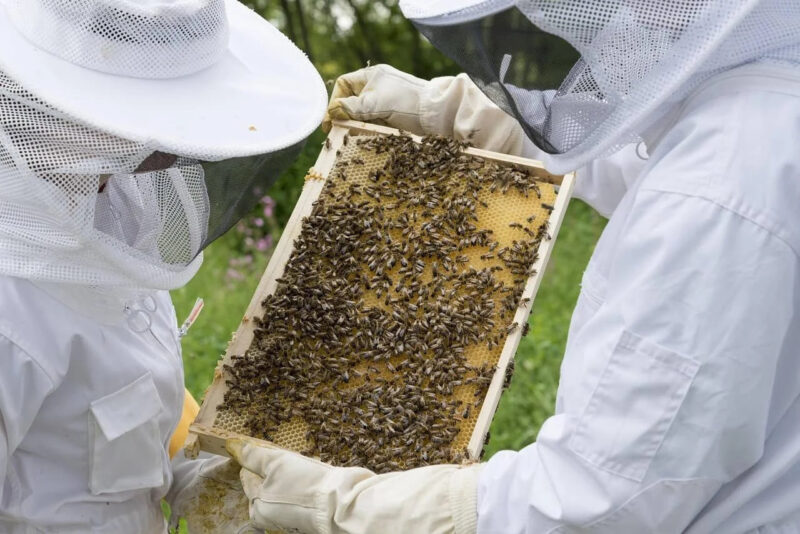
Humanely removing bees begins by carrying out an examination to find the exact location of the hive, count the number of bees, calculate their age, and see how easy it is to reach them. The correct equipment and protective clothing are then used to use a vacuum system, which does not cause any harm to the insects. It is necessary to collect the queen bee before collecting other bees, as they tend to follow her everywhere. Honeycomb removal follows bee removal, as otherwise, the abandoned honeycomb will attract other hives, melt wax, and allow honey to seep into the walls.
Why Los Angeles Presents Unique Challenges?
Because of the moderate and year-round climate found in Los Angeles, there are conditions in place that encourage thriving colonies of bees for lengthy periods of time without having their population reduced due to severe winters that exist in other places within the country. Africanized honey bees represent another factor that adds difficulty to bee removal operations in Los Angeles, where this aggressive type of bee is prevalent. These Africanized hives have a tendency to be extremely defensive towards potential threats and may pursue threats farther than the European honey bee would be expected to chase such threats.
Seasonal Patterns and Swarm Activity
The swarm season occurs in the Los Angeles region mainly from March through June, during which time the colonies will split, and part of the colony, consisting of worker bees, led by the queen bee, will leave the hive to look for another place to nest. At this time, people could be seen to have a cluster of bees perched on their fences, tree branches, or the outside walls of their homes. The swarms at this time tend to be docile and usually do not need any help because they will relocate themselves within a day or two. Nevertheless, once the swarm discovers a proper place to settle, for example, in a tree hole, behind the exterior walls, they would build up a colony in just a few days.
Choosing the Right Removal Approach
However, there are times when the scenarios in which bees have to be relocated do not present identical conditions, and it is important to determine what course of action needs to be taken depending on various considerations like the beehive’s position, the materials used in building the hive, the length of time that the issue has persisted, and whether Africanized bees are present. The bee relocation experts will evaluate the situation first and ensure that the customer understands the procedure, the duration of time it will take, and the necessary follow-up steps.
A Lasting Solution
A proper humane bee removal procedure solves the issue permanently without adding to the ongoing decrease in the population of pollinators. The colony gets another chance in an appropriate apiary or natural environment, the property is protected from any future threats, and the local environment continues to have a positive impact. For those who are struggling with a bee infestation in Los Angeles, it helps to understand how humane bee removal works in order to make an educated choice. More information on what the bee removal process looks like can be obtained at thebeeremovers.com.



More Stories
Things To Consider While Choosing A Fencing Company In Cypress
Pest Control: How And Why To Take Out Animals?
5 Stylish Plant-Pot Ideas To Transform Your Living Space